BACKEND / GO
FoodBridge
A food-sharing backend connecting user accounts, food posts, bookings, and notifications.
Backend development · Sep–Nov 2025
My contribution
Designed APIs with Go, Echo, and PostgreSQL. Used Docker for consistent development environments, maintained API documentation, and configured deployment through Render and Aiven.
Try it · mini version
See what it can do
KMITL · 01076035 Software Development Process in Practice
The problem
A food-sharing app needs to keep accounts, available food, and bookings connected while protecting user-specific actions.
What this delivers
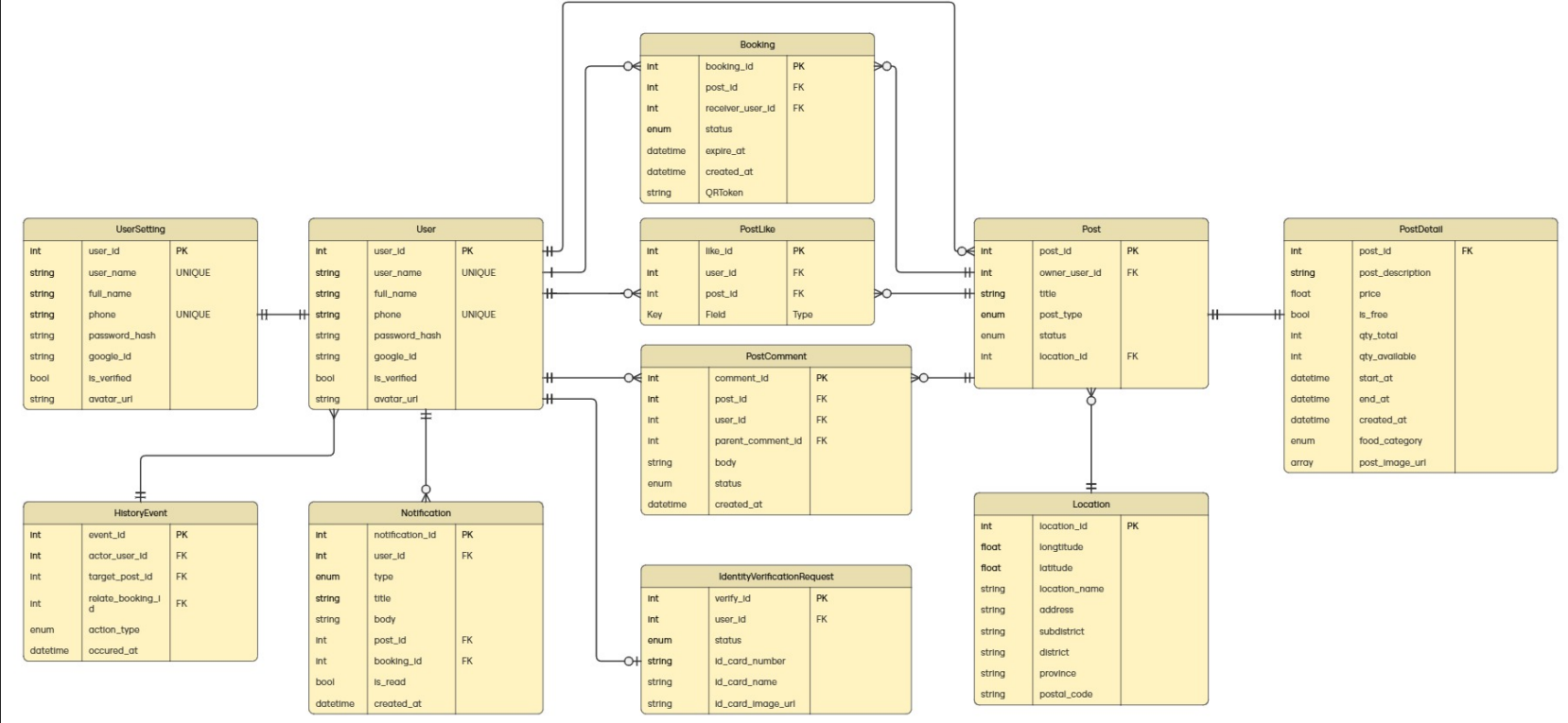
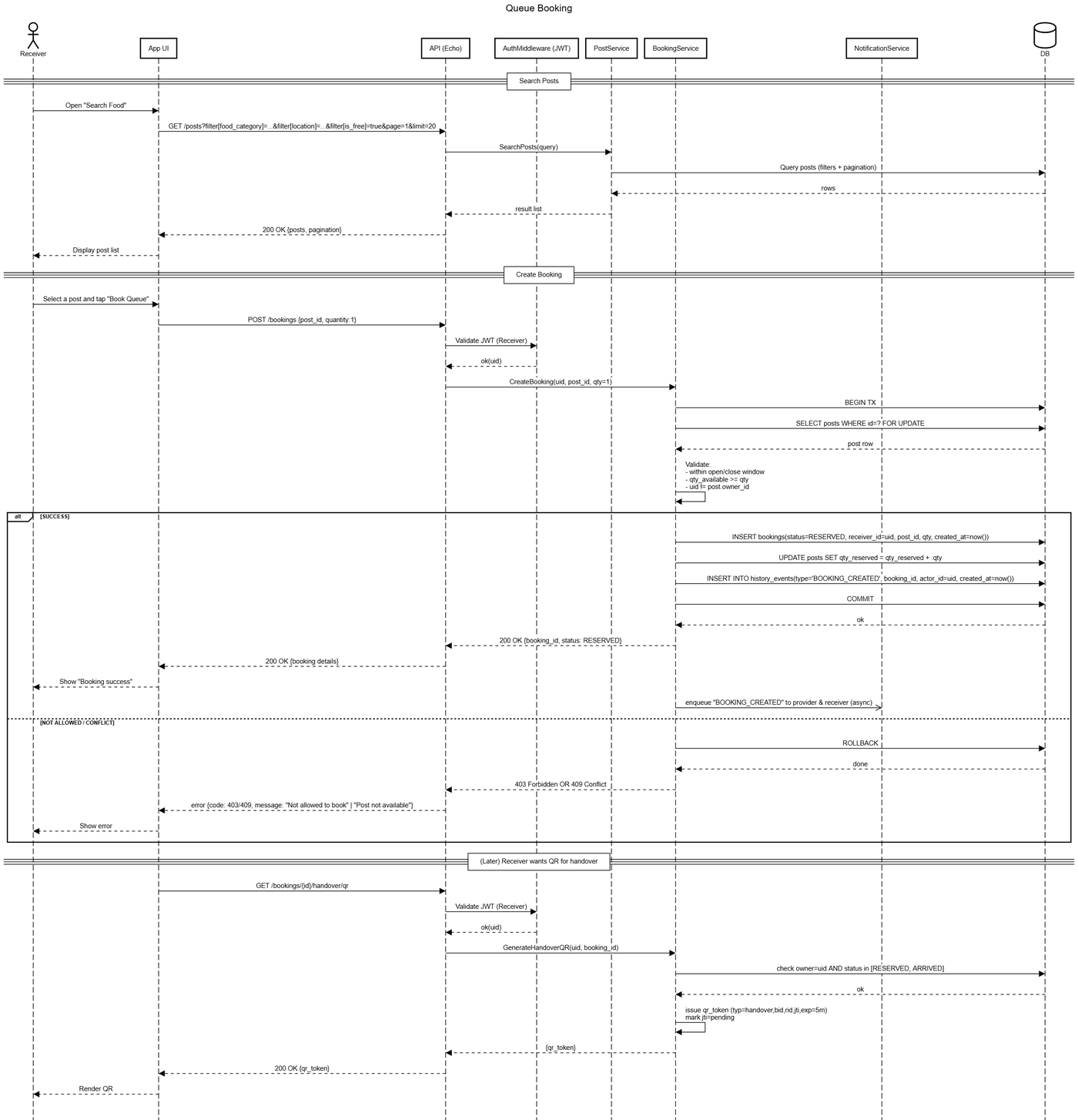
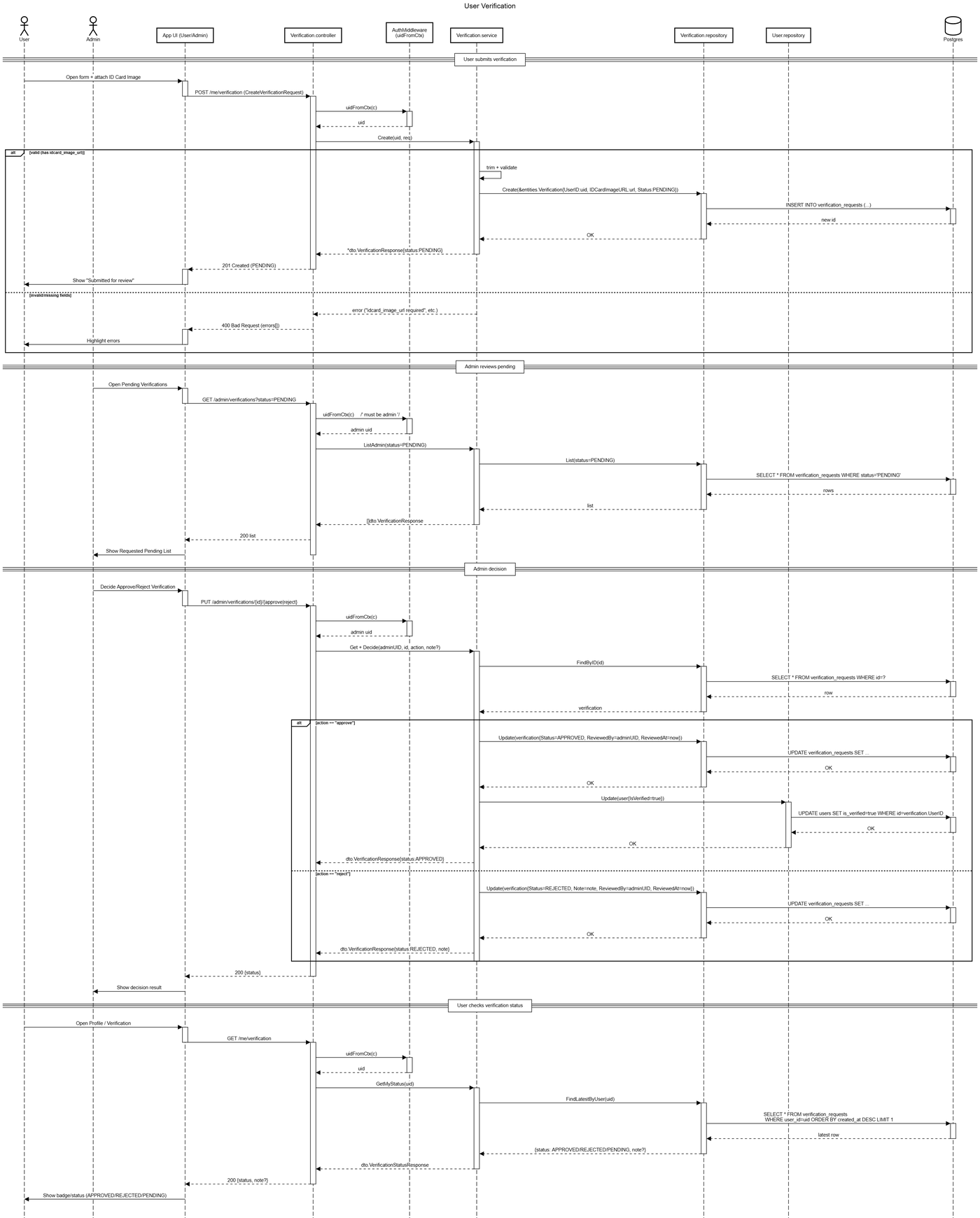
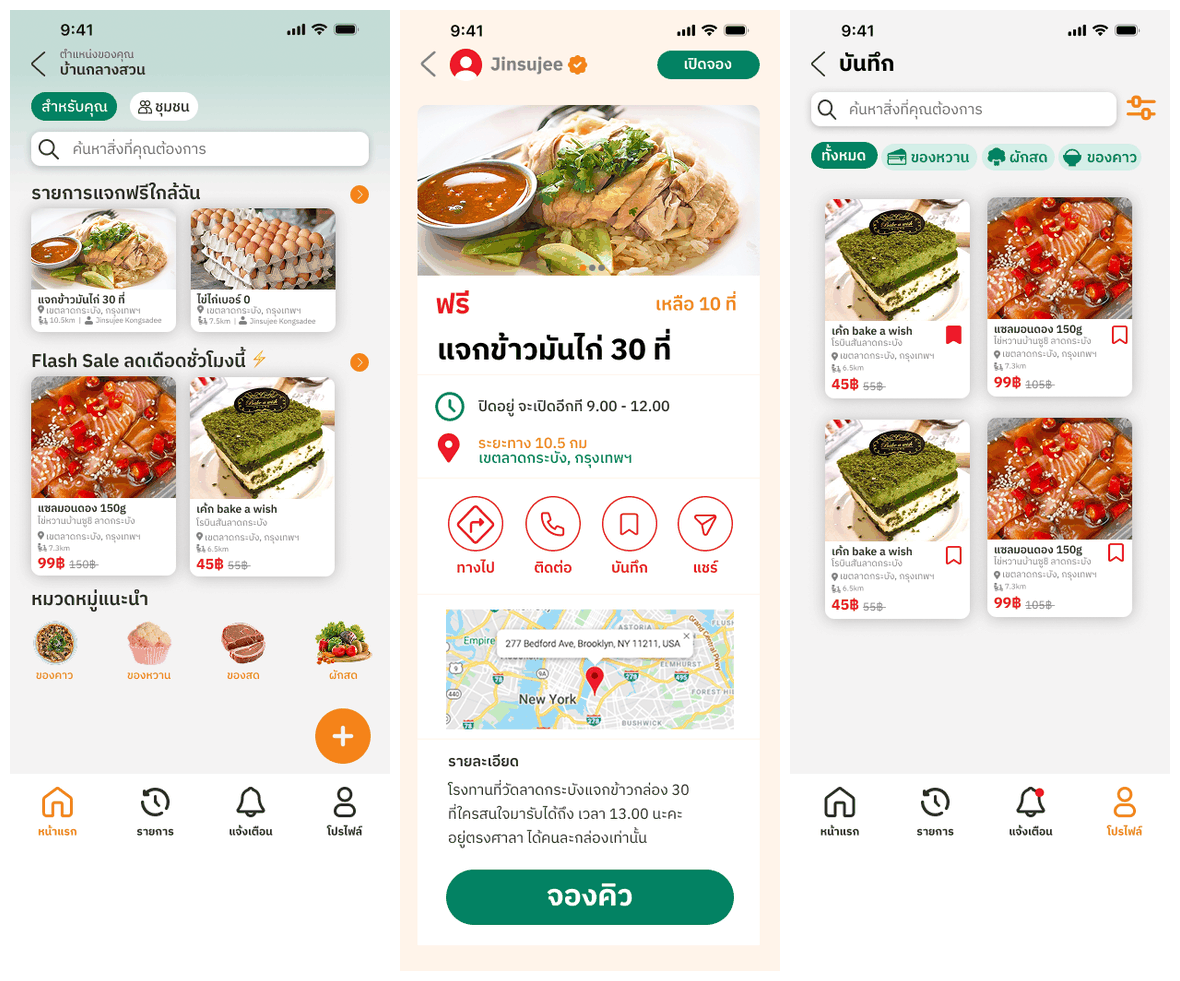
A documented Go backend with JWT-protected routes, PostgreSQL models, Docker configuration, and separate controllers, services, and repositories. Original app screens, an ER diagram, and sequence diagrams show the workflow.
What this project does
FoodBridge supports food redistribution: people publish available food and others book it. Its backend coordinates accounts, posts, reservations, comments, notifications, and reports so the frontend can manage the sharing workflow.
Inside the project
- Structure Go services into controllers, business logic, and repositories.
- Use JWT-protected routes and PostgreSQL models through GORM.
- Support frontend integration with API documentation and consistent Docker environments.
- Configure deployment on Render with an Aiven database, as documented in my CV.
Skills & practical experience
Practice separating business rules from storage, designing relational APIs, and taking a backend from local development to deployment.
Backend responsibilities are documented in my CV and public Go repository. The KMITL archive supplies the original app screens, ER diagram, and sequence diagrams. Course confirmed by Ratha: 01076035 Software Development Process in Practice.
Project context
Food-sharing backend project documented in the public repository and KMITL archive. App screens illustrate the companion experience; they are not a claim that every interface element was my individual work.
Project media