COMPUTER VISION / RESEARCH
Expression-Guided Person Segmentation
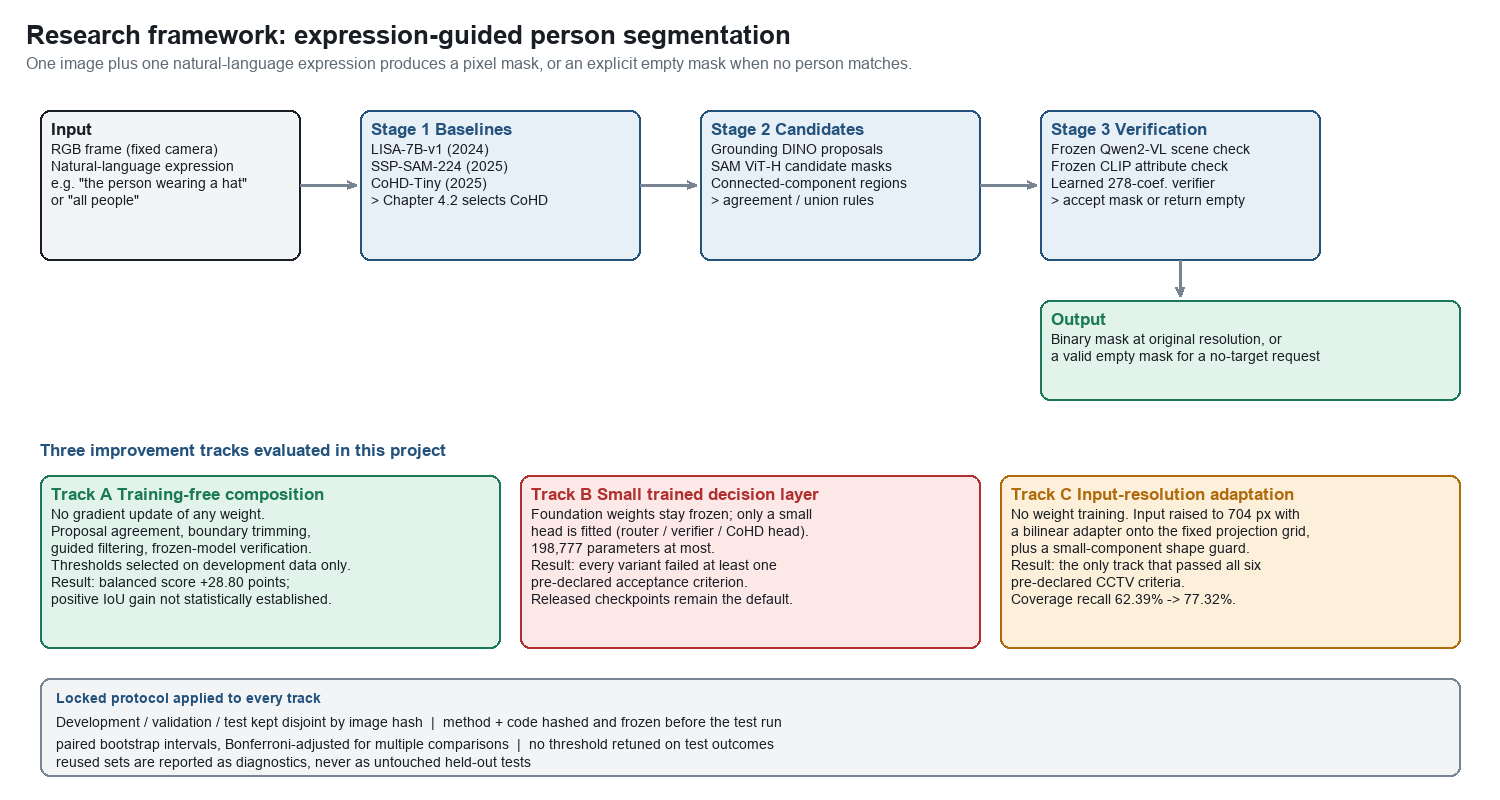
A fixed-camera image and a natural-language description go in; a pixel-level person mask—or an explicit no-match result—comes out.
KMITL Project 1 · Team research
My contribution
Contributed to experiment implementation, evidence tooling, comparative evaluation, and technical reporting across the project workflow.
Try it · mini version
See what it can do
KMITL · CE69-27 Project 1 · Work in progress
What this project does
The research asks whether language-guided segmentation can identify a described person in fixed-camera surveillance imagery and return a pixel mask, including an empty mask when no person matches. LISA-7B-v1, SSP-SAM-224, and CoHD-Tiny are compared under shared evaluation protocols.
Inside the project
- On the 90-image gRefCOCO slice, CoHD-Tiny reached 78.01% positive-target mean IoU and ran about 21.6× faster than LISA in the reported setup.
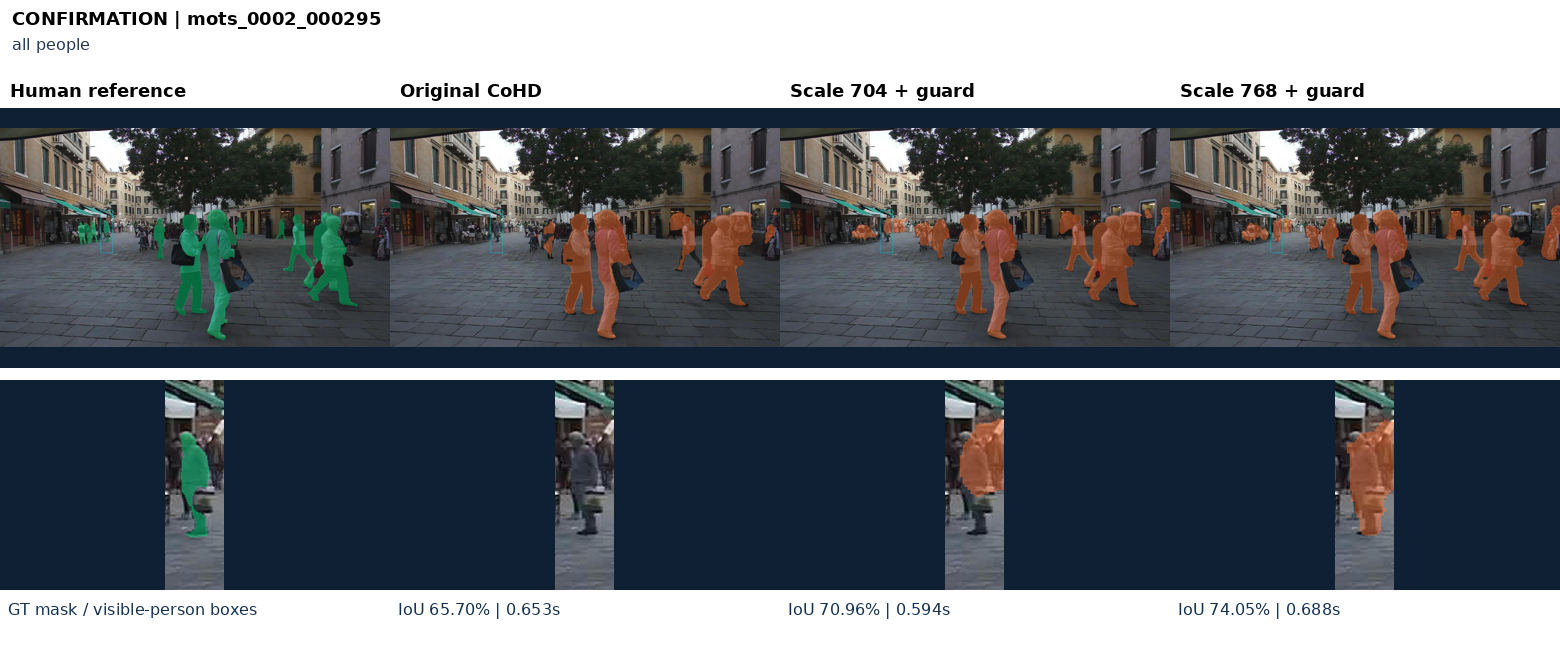
- On the locked 120-frame confirmation set, Scale704 with a guard raised MOTS coverage recall from 62.39% to 77.32%.
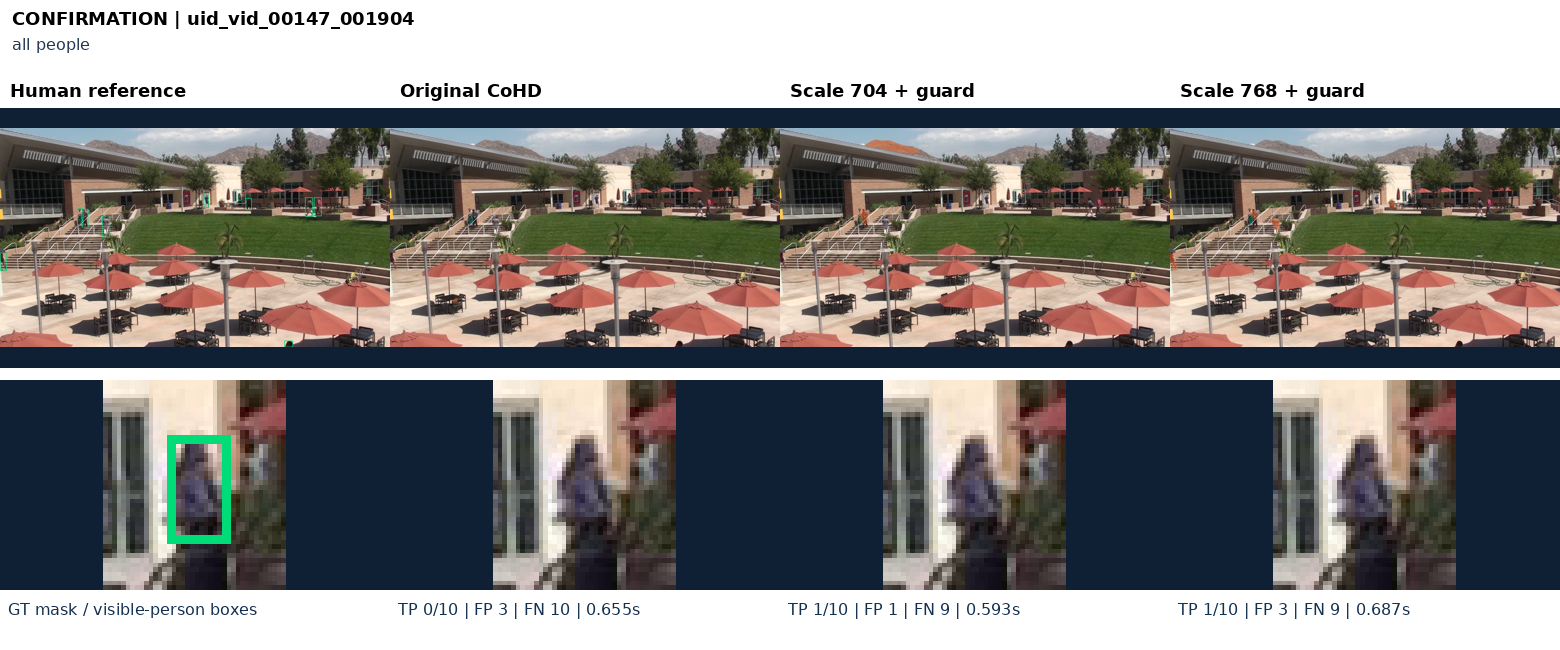
- On VIRAT, matched people increased from 10 to 48 of 635 while false-positive components fell from 150 to 120; mean time changed from 0.6541 to 0.5934 seconds per image.
Skills & practical experience
Practical experience with referring segmentation, vision-language models, controlled evaluation, ablation-style comparisons, evidence tracking, and reporting results with explicit limits.
Figures and measurements come from the latest 30% progress report and its generated thesis assets. The current evidence covers two fixed daytime viewpoints; many distant or small people are still missed.
Project context
Active academic research on two fixed daytime CCTV viewpoints. Results show progress on the evaluated samples; they do not establish unseen-camera or broad real-world generalization.
Project media